Patient information · Assessment and treatment
Dental TENS for TMJ disorders
Pain when chewing, a tired jaw and muscle tension can make everyday meals uncomfortable. When the chewing muscles are involved, one option is TENS: electrical nerve stimulation delivered through electrodes on the skin.
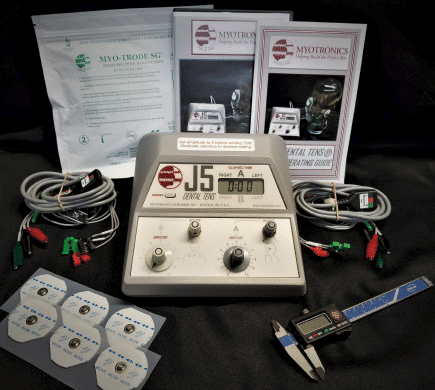
I am Dr. Svetlana Prisiazhnykh, a Specialist Prosthodontist with a PhD. At MedPalm Dental in Dubai, I use the Myotronics J5 Dental TENS to release tension in the chewing muscles and ease pain. If there is no serious joint dysfunction, the procedure can be enough on its own. In other cases, it is a step before treatment with a dental splint.
Treatment starts with a conversation about your symptoms and an examination of the joints, muscles and teeth. This helps determine where TENS fits in your care.
How dental TENS works
TENS stands for transcutaneous electrical nerve stimulation. In its dental application, the J5 stimulates branches of the trigeminal (V) and facial (VII) cranial nerves. Electrodes on the skin deliver controlled pulses. The device I use is designed for dentistry and operates at an ultra-low frequency. Its four channels allow stimulation on both sides, including the chewing muscles and muscles around the neck and upper shoulders.
I use it for three tasks: to relieve muscle spasm and pain in TMJ dysfunction, to prepare for splint treatment, and to relax the muscles before a bite record is taken. At the consultation, I explain which of these applies to you.
The examination identifies what needs attention
The temporomandibular joints, or TMJs, sit just in front of your ears. They work with the chewing muscles to move the lower jaw. Disorders affecting these joints and muscles are known collectively as temporomandibular disorders, or TMD.
Jaw pain can come from the chewing muscles, the joint, the teeth or several sources at once. I ask where the pain occurs, which movements trigger it and whether your jaw clicks or locks. I examine jaw movement, the muscles and joints, and how the teeth meet.
These details help put a symptom into context. A painless click with comfortable movement is different from a click accompanied by pain or repeated locking. Painless joint sounds commonly need no treatment; pain or restricted movement calls for assessment.
You can read more about how I assess jaw joints and muscles.
TENS and splints in the treatment plan
A splint is a removable appliance fitted over the lower teeth or, less often in my practice, the upper teeth. Its design, contacts and wearing schedule depend on the treatment goal. It works through its shape, fit and contact with the opposing teeth. TENS acts through electrical stimulation during the procedure. Each method has its place in the plan.
I decide whether you need a splint after TENS based on your symptoms and the examination findings. The splint therapy guide explains appliance selection, fabrication, fitting and follow-up.
Muscle relaxation and dental bite records
A dental technician makes a splint, crowns or dentures from models of your jaws. To understand how the upper and lower teeth meet, the technician needs the models positioned in the relationship selected for treatment. I determine that position with attention to muscle function and the condition of the temporomandibular joints.
When I use TENS for a bite registration, I first relax the muscles and identify a myocentric position: a jaw relationship determined with the muscles in a relaxed state. During the procedure, I take a bite record in a special material, followed by a digital scan for the next stage of work.
An accurate bite record helps communicate the selected jaw relationship to the laboratory and create appropriate contacts with the opposing teeth. At fitting, I check the fit, tooth contacts and your comfort. An error in the record can mean substantial adjustment or remaking the appliance: it may interfere with closure and distribute load unevenly across the teeth, muscles and joints.
Tense muscles can hold the jaw in an unfamiliar position, and the record will capture that position. That is why I relax the muscles with TENS before taking the record. I then check it against the examination findings and the goals of the planned work.
TENS, condylography and MRI answer different questions
TENS is a treatment, while condylography and MRI are investigations: they show how the jaw moves and what condition the joint tissues are in.
I select further investigations according to the clinical question. The joint disc is assessed with MRI, which shows what a movement recording cannot. My condylography guide explains how recordings are taken and used in planning.
| Method | Information or purpose |
|---|---|
| Dental TENS | Relaxing the chewing muscles and easing pain; preparing for a bite record |
| Condylography | Recording the paths and range of jaw movement |
| MRI | Assessing the joint disc and surrounding soft tissues |
| CBCT | Examining the bony structures of the joint |
What research says about TENS for TMJ pain
Research has examined pain relief, mouth opening and changes in muscle activity after TENS. These are relevant outcomes for someone who finds chewing or opening the mouth uncomfortable.
A 2026 systematic review and network meta-analysis brought together 22 randomised trials involving 987 adults across several electrical stimulation methods. Its pooled estimates favoured TENS for short-term pain relief and mouth opening. The authors rated the certainty for these effects as low because of limitations in the studies and differences between them.
For longer-lasting pain, clinical guidance also matters. A 2023 BMJ guideline gives a conditional recommendation against TENS for chronic TMD-related pain lasting at least three months. For this type of pain, the guideline prefers other treatments.
That is why, before treatment begins, I discuss with you what result to expect and when to assess it. The reviews combine different TENS protocols, so I check the result of my own procedure separately, at the review visit.
Assessing whether the benefit lasts
Before treatment, it helps to note what is difficult for you: chewing firmer food, opening your mouth wide to eat, or speaking for a long time.
Questions at review can then be concrete: is the familiar pain less intense, is movement more comfortable, and does the improvement persist between visits? If relief fades or symptoms change, that information helps guide reassessment.
I check both the relief immediately after stimulation and whether chewing and speaking remain comfortable over the following days. This is part of the review appointment.
Preparing for a dental TENS appointment
Tell me about previous investigations and any splint or night guard you already wear. Explain how your symptoms have changed and whether earlier treatment helped. Any reports and scans you already have help make the discussion more specific.
Before electrical stimulation, disclose a pacemaker or another implanted electronic device, epilepsy, pregnancy and skin problems where electrodes may be placed. These determine whether the procedure can be done. Report discomfort or skin irritation during the procedure.
Facial electrode placement and stimulation settings require professional guidance. Do not reproduce a dental procedure with a home TENS unit.
Questions patients ask
Does the procedure hurt?
You will usually feel a light, rhythmic twitching of the facial and neck muscles from the gentle, infrequent pulses. I adjust the strength of stimulation for comfort. If you notice an unpleasant sensation or skin irritation under the electrodes, tell me so that I can check the electrodes and settings.
When will I feel relief?
Many people notice that their muscles relax during the session or right after it. Whether the effect lasts becomes clear over the following days, so I schedule a review visit and ask how chewing and speaking have felt. If the relief fades quickly, we review the plan.
How is dental TENS different from a home TENS unit?
TENS devices differ in their intended use and stimulation settings. The J5 is designed for dentistry and operates at an ultra-low frequency, with electrodes placed on the face and around the muscles being treated. A clinician should select their position and the strength of stimulation. Do not use an ordinary home unit to reproduce a dental procedure yourself.
Does TENS help with bruxism?
Bruxism means clenching or grinding the teeth during sleep or while awake. TENS is used to reduce tension and pain in overworked muscles; it does not stop the clenching or grinding itself. Where needed, I select a splint to help protect the teeth from wear and manage the load.
Can I eat and work right after the procedure?
TENS requires no recovery period, so you can usually eat, work and drive afterwards. Take account of how you feel and any other procedures carried out during the same visit.
Can I book TENS directly?
The first step is a consultation with an examination of the joints, muscles and teeth. I recommend TENS when the examination findings indicate that it is appropriate for your muscle symptoms.