Patient information · Assessment and treatment
Dental rehabilitation and bite restoration in Dubai
Dental rehabilitation starts with understanding what needs to change: the appearance of your smile, lost tooth structure or the way your teeth meet. When treating worn or damaged teeth and planning extensive restoration, I assess the dental arches, jaw movements and joints. As a specialist prosthodontist at MedPalm Dental, I plan the restorative work and coordinate with an orthodontist when tooth movement is needed.
Assessing advanced tooth wear
I assess tooth length and shape, the amount of healthy tooth remaining, sensitivity, chips and existing restorations. I also check whether there is enough space to rebuild the worn or damaged surfaces. If teeth are missing, we discuss how to replace them.
Tooth wear needs to be considered alongside its possible causes, including mechanical loading and acid exposure. A photograph cannot tell us how quickly wear is progressing today. A TMJ complaint alone is not a reason for full-mouth restorative treatment.
Tooth health and function come first
An examination, photographs, scans or models and appropriate imaging establish the starting point. We discuss chewing, speech, cleaning and your expectations as well as appearance. Muscle and joint symptoms are assessed separately.
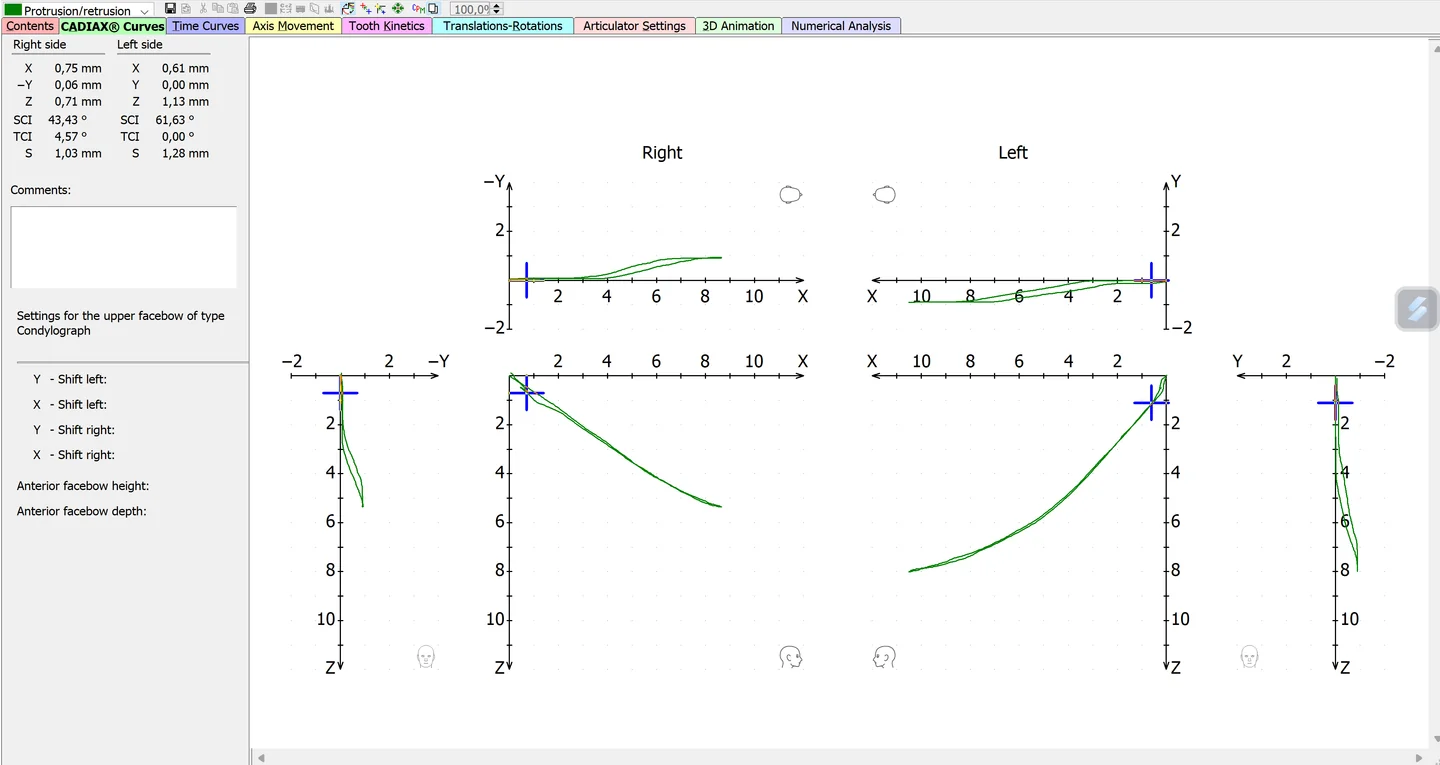
Occlusion describes how the upper and lower teeth contact. Both closing contacts and contacts during movement matter when designing restorations. An articulator, with individual condylography settings when needed, helps us study the planned tooth shapes and how they work together.
Space for restorations and the bite relationship
The amount of tooth wear does not tell us exactly how much bite height has been lost, because the teeth and supporting structures can adapt. I assess how much space the restorations need, how they will change your bite and how much healthy tooth can be preserved.
Sometimes moving teeth with orthodontic treatment creates the space needed for restorations. In other cases, we can provide that space through the restoration design. We make these decisions before preparing the teeth. At MedPalm Dental, I coordinate this work with colleagues so that tooth movement and restoration follow an agreed sequence.
Who takes part in treatment?
As your prosthodontist, I coordinate the restorative treatment. An orthodontist assesses whether teeth need to move to make room for restorations. A general dentist provides dental treatment within their scope of practice, and a surgeon carries out any surgery that is needed.
Not everyone needs every specialty. Before treatment, the team agrees what must happen first, which restorations will be temporary and when final work can begin. This reduces the risk of completing work that a later stage would require us to change.
Prosthodontist
Defines the restorative design and coordinates stages.
Orthodontist
Assesses tooth movement and space preparation.
Dental technician
Models and manufactures the work using agreed records and prescriptions.
Diagnostic modelling and temporary restorations
Before making the final restorations, we model the proposed tooth shapes. When possible, we transfer a trial version, called a mock-up, to your mouth. This lets us discuss the shape, proportions and appearance together.
For extensive treatment, temporary restorations let you try the planned tooth shapes in daily life. I ask how comfortable it is to chew, speak and bring your teeth together, and whether you can clean between them. Your experience and the examination findings help me refine the final restorations.
While wearing the temporary restorations, note anything that feels better or still bothers you. For example, does one tooth touch first, has your speech changed, or is an area difficult to floss? We discuss these details at your review.
Choosing and checking the final restorations
I choose a filling, inlay, onlay or crown based on how much healthy tooth remains, the forces it needs to withstand and how the restoration can be secured. A worn tooth does not automatically need a crown. The aim is to restore the necessary form while preserving tissue where possible.
At the fitting appointment, I check that each restoration fits precisely along the edges of the prepared tooth and meets the neighbouring and opposing teeth as planned. We discuss cleaning and follow-up visits. Restorations can chip or develop other problems, so ongoing care remains important.
From practice: aligners and 28 ceramic restorations
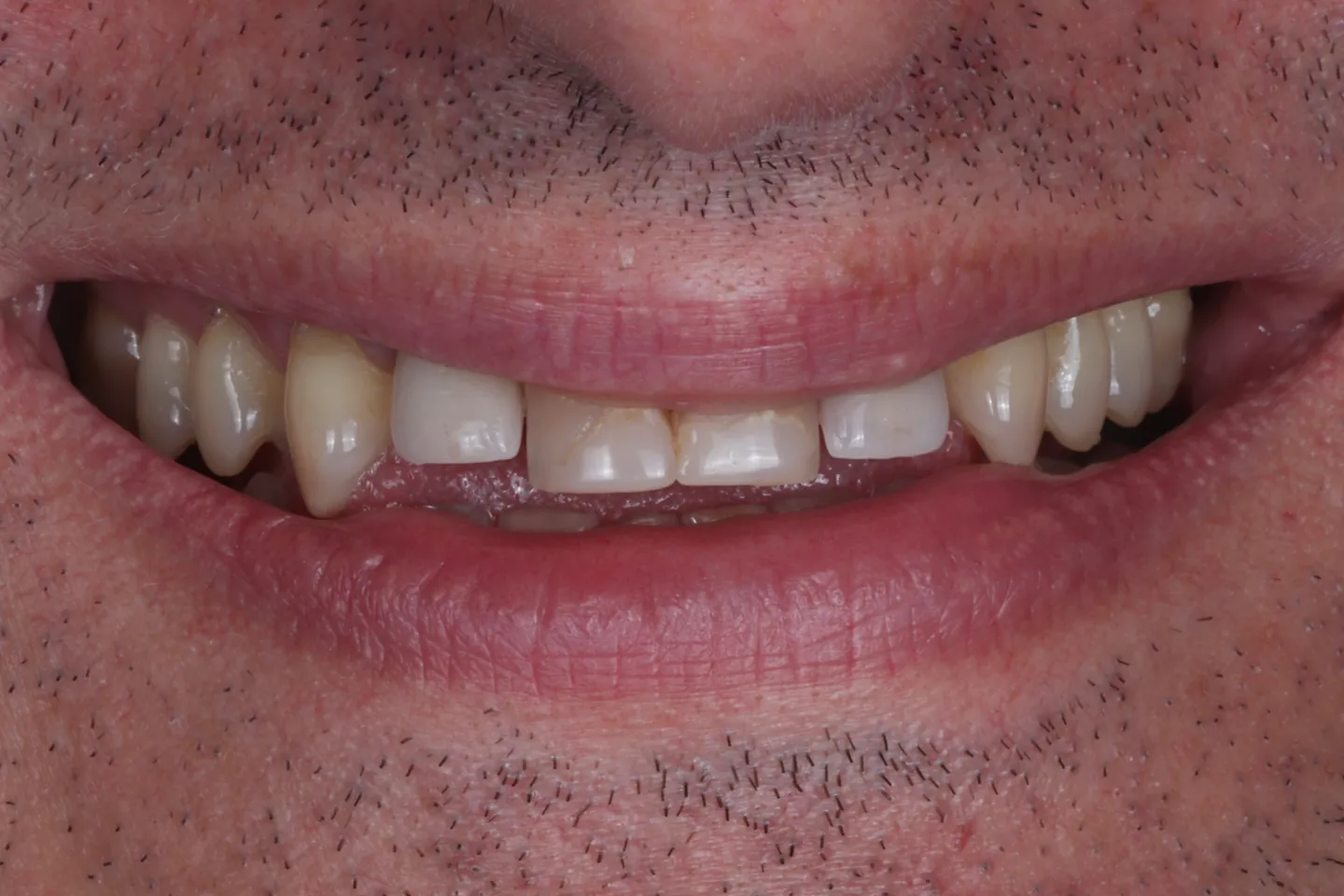
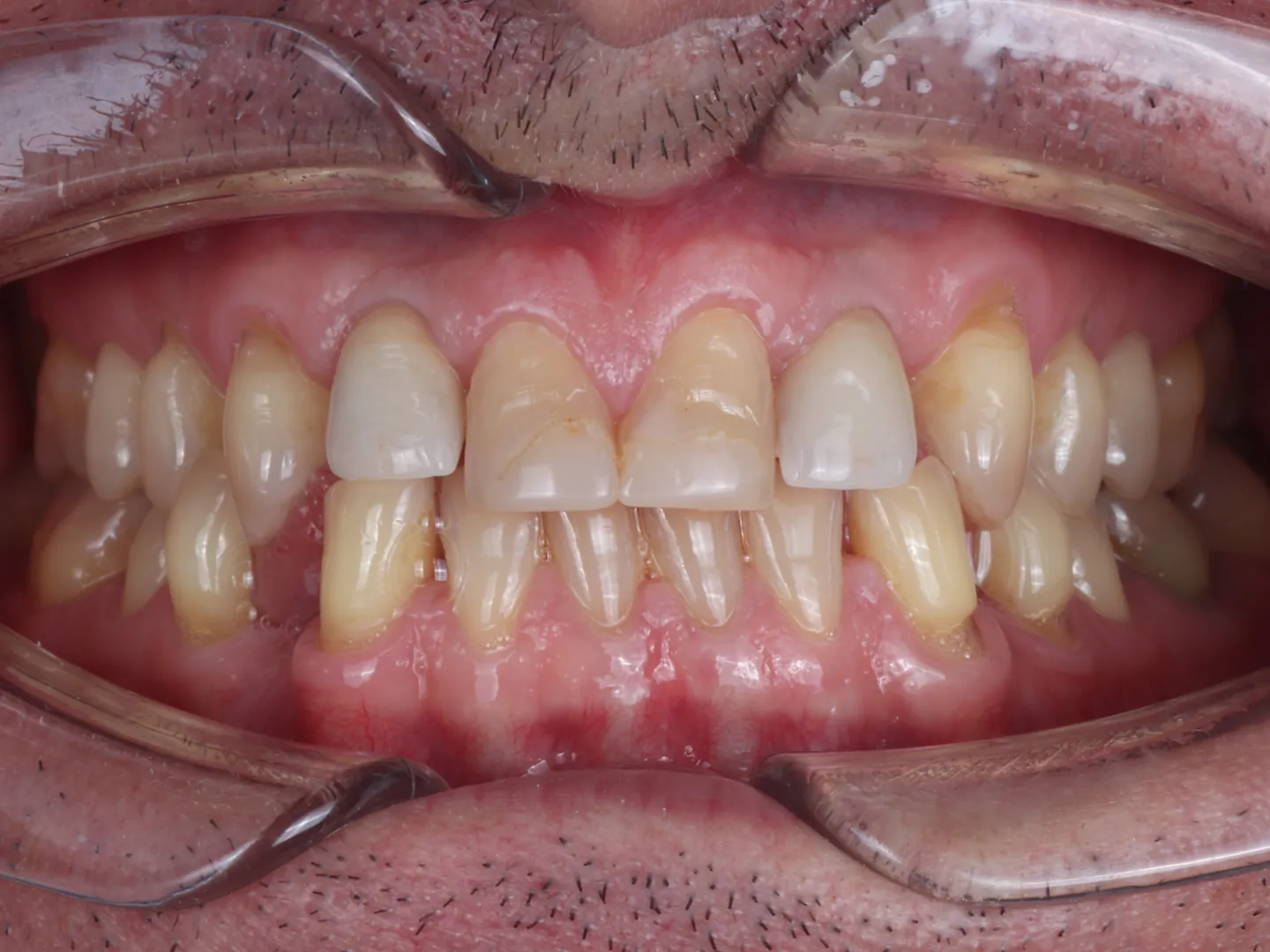
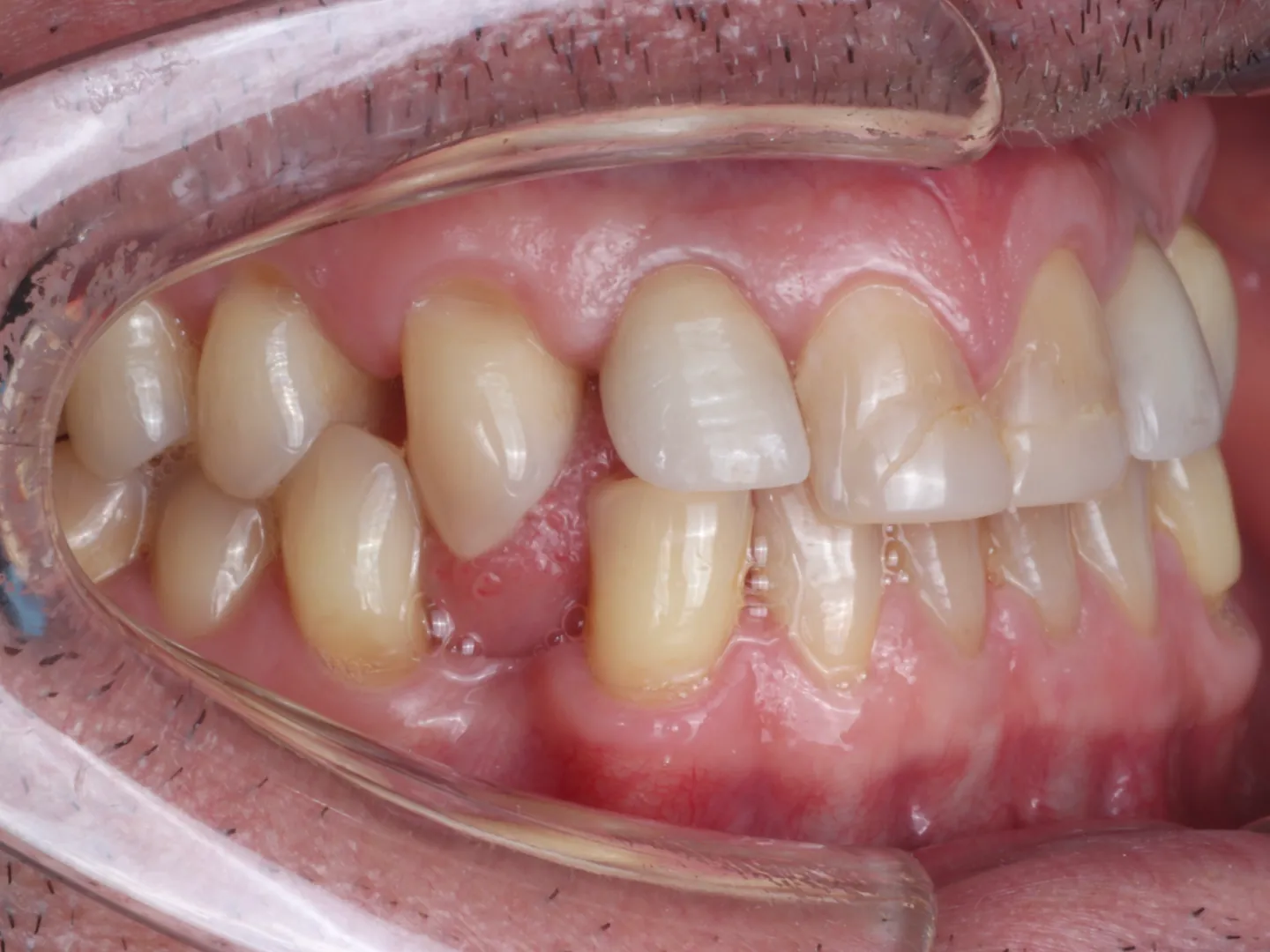
Treatment in this case took two years. The photographs and account below follow the initial presentation, assessment and dental restoration.
Before treatment
The patient wanted to improve his smile and reported clicking in the right TMJ. These photographs document the initial tooth shapes and how the teeth met.
Functional diagnostics
I began with a functional assessment, reviewing jaw movements, joint MRI records and the parameters for setting the articulator. Planning included selecting the mandibular position and the change in bite height. The CADIAX movement recording from this case is shown below.
Preparation with clear aligners
Before the restorative stage, the patient underwent orthodontic preparation with clear aligners. Tooth movement was a separate part of the overall plan and preceded the ceramic restorations.
After treatment
Following orthodontic preparation, the dental arches were restored with 28 ceramic restorations. The clicking in the right TMJ resolved. The photographs show the smile, tooth contacts and chewing surfaces after treatment.
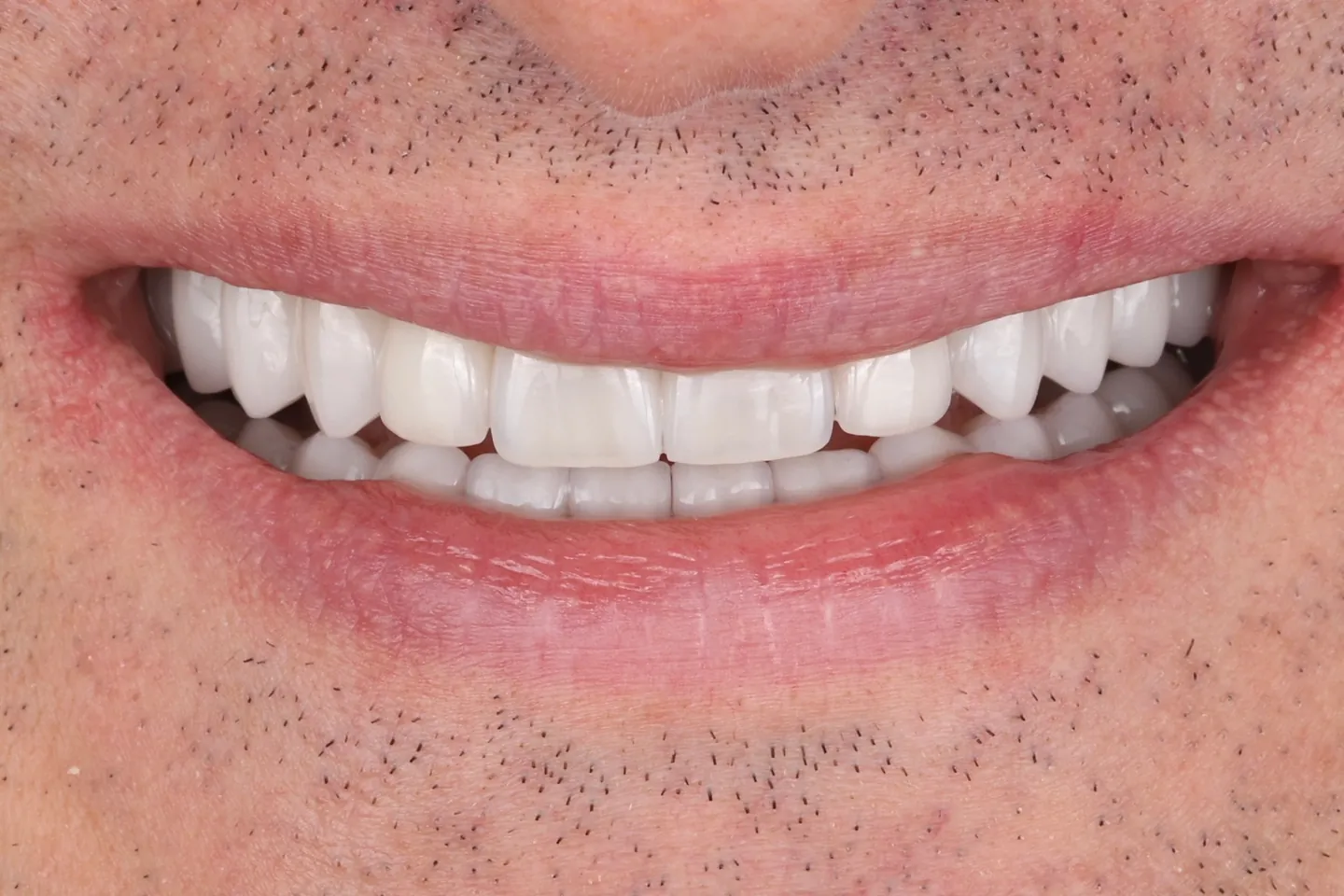
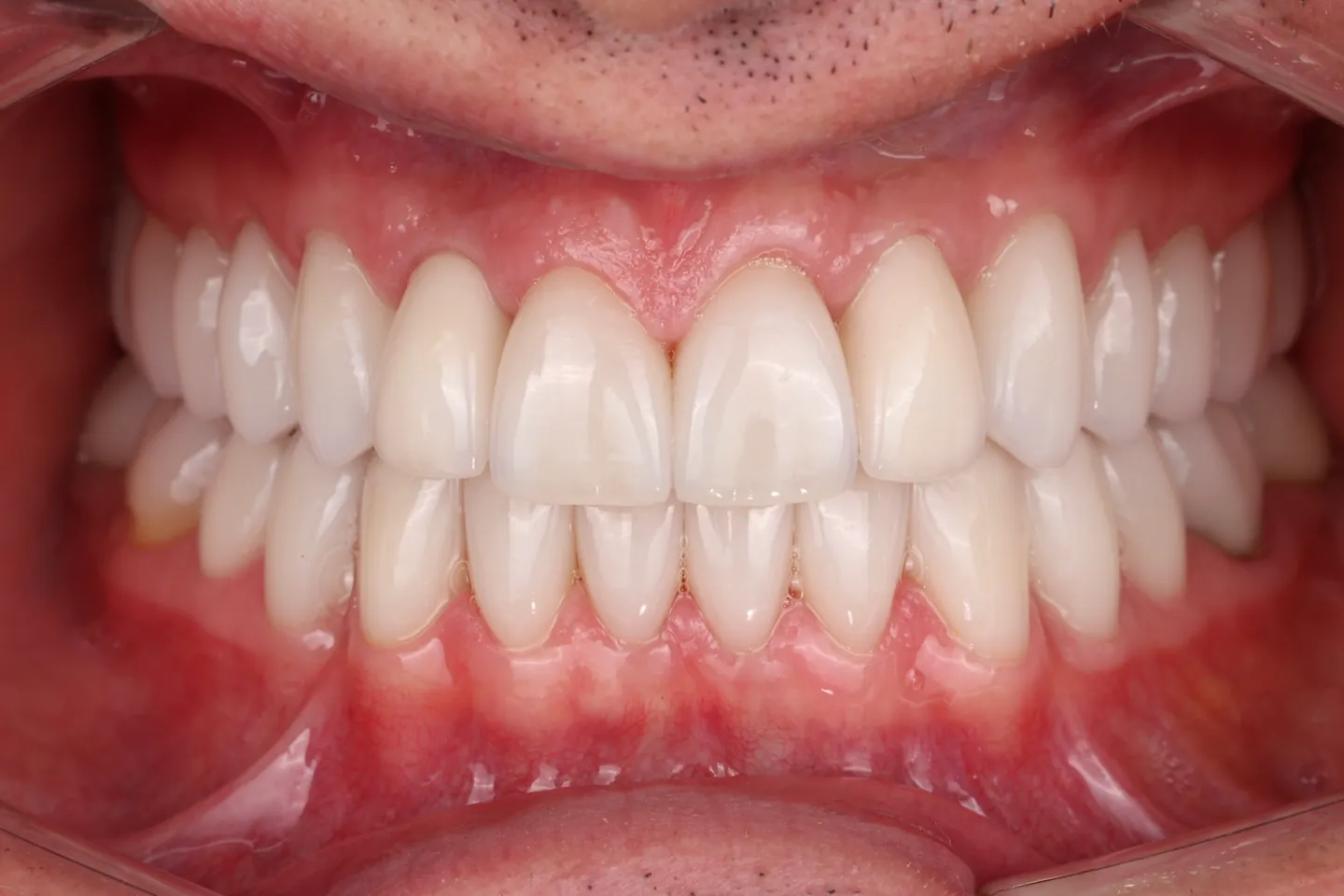
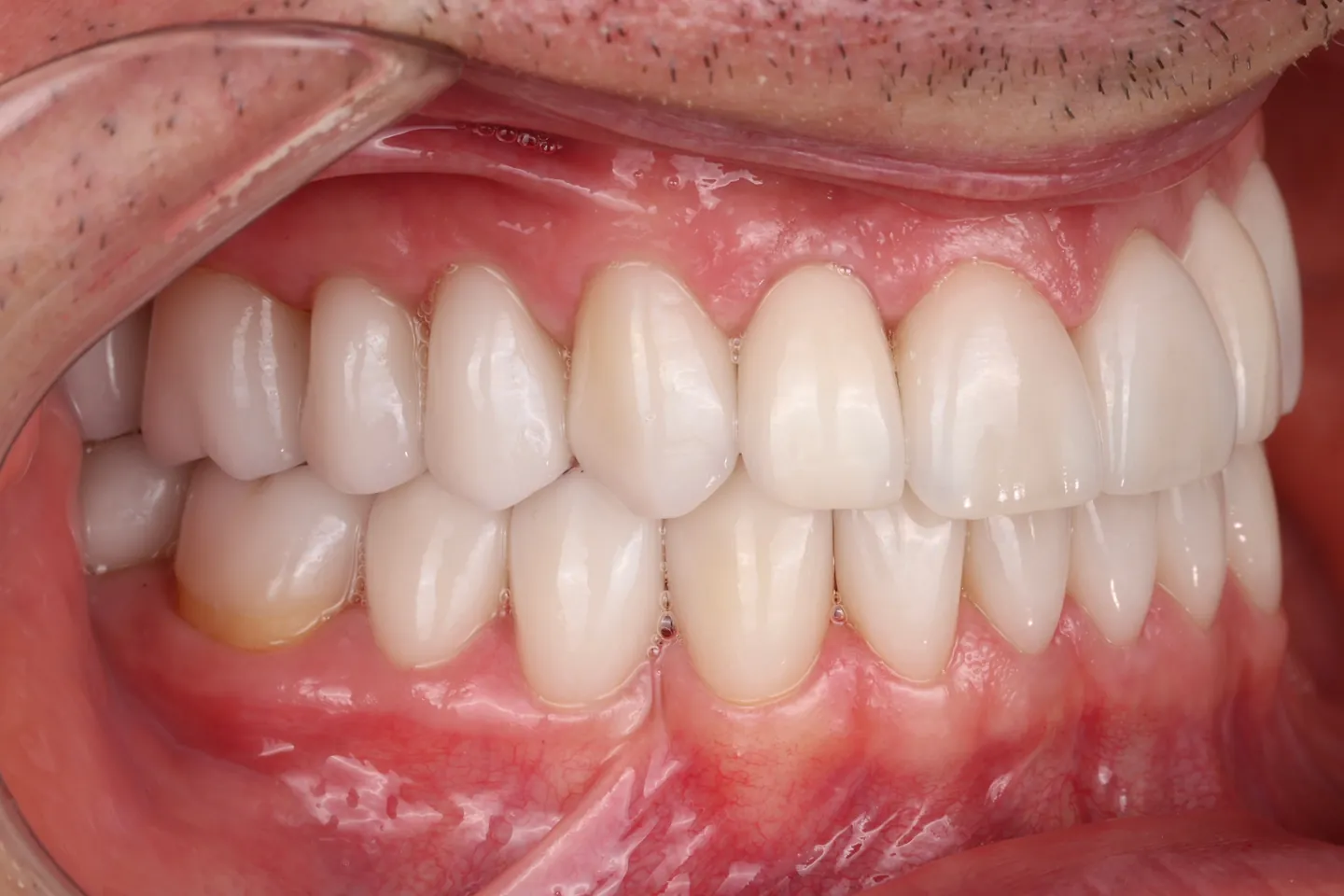
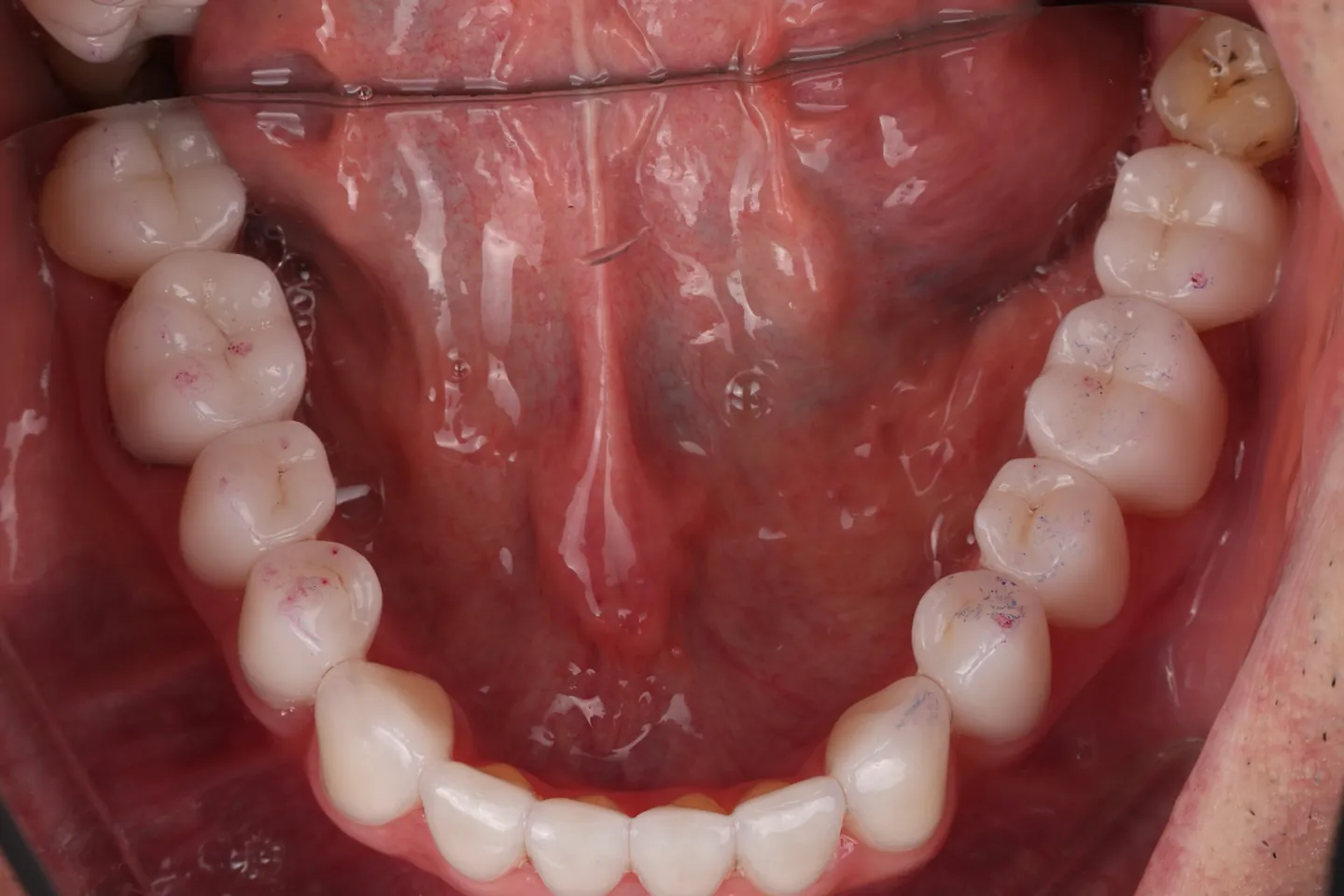
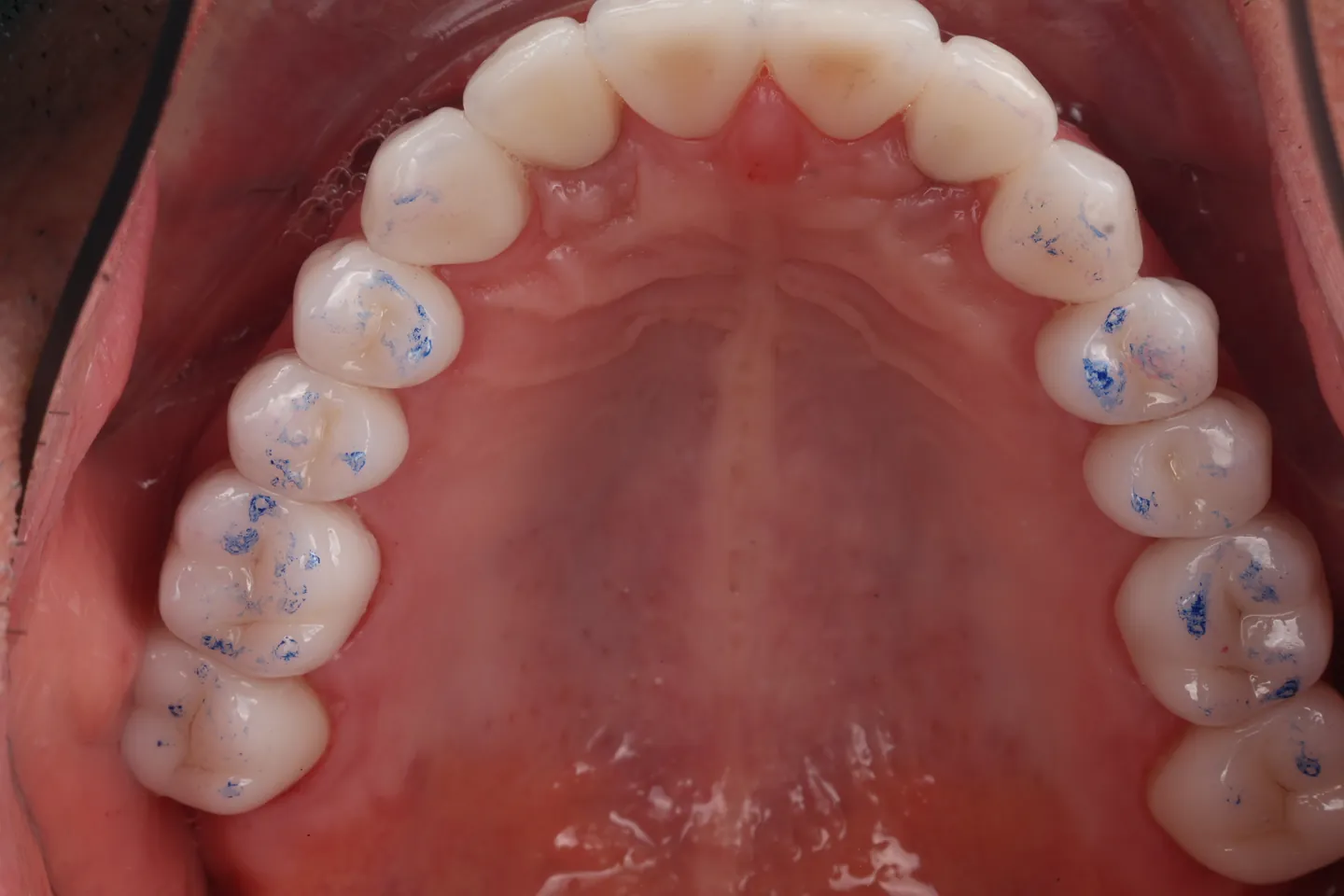
There is no guarantee that the result will be the same, as it might vary from one individual to another. Rehabilitation risks and individual considerations are discussed during treatment planning; see “How does rehabilitation relate to TMD care?” below.
Looking after the restored teeth
At follow-up visits, I check your gums, the restorations and how comfortable chewing feels. Small chips, changes in your bite or areas that are difficult to clean can then be addressed early.
If your teeth remain under heavy strain, I discuss how to protect the restorations and whether an appliance would help. I also explain which changes to look out for at home and when to contact me.
How does rehabilitation relate to TMD care?
Tooth damage and TMJ disorders can occur together. I assess the need to restore the teeth alongside the care needed for joint pain and jaw movement. Each part of treatment has its own indications, and we agree how the stages fit together.
Tooth preparation is irreversible. Sensitivity, additional dental treatment and restoration complications are possible. Orthodontics also has risks and requires careful hygiene. Before treatment begins, we discuss the alternatives, how much work is needed and what postponing a stage could mean for your teeth. How long restorations last depends on tooth health, the forces they are exposed to, the materials used and ongoing care.